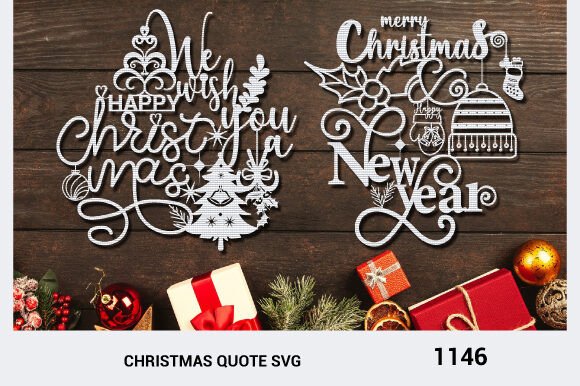
Christmas Quote Ornament SVG Laser 1146
A Designer’s First Look: Charm, Clarity, and Craftsmanship
When I opened Christmas Quote Ornament Svg Laser 1146, my first thought wasn’t “pretty”—it was “purposeful.” This isn’t a cluttered holiday collage or an overdesigned motif. It’s a clean, centered quote—likely something warm and timeless like “Joy to the World” or “Believe in Magic”—framed inside a classic ornament silhouette: smooth curves, subtle scalloping, and balanced negative space. As a designer who’s stitched hundreds of holiday pieces for boutique clients and Etsy sellers, I immediately saw its versatility—not as a standalone graphic, but as a machine embroidery design that could anchor real handmade products.
Where It Shines: Real Projects, Real Customers
Last week, I prepped a batch of custom embroidered tote bags for a local gift shop’s holiday launch. I tested Christmas Quote Ornament Svg Laser 1146 on medium-weight canvas with tear-away stabilizer—and it held up beautifully. The outline stayed crisp, the lettering legible even at 3.5”, and the ornament shape gave just enough visual weight without overwhelming the fabric. That same day, a client ordered personalized baby onesies with festive embroidery; this design scaled cleanly down to 2.75” with minimal stitch loss. It worked equally well on sweatshirt embroidery (using cutaway stabilizer) and on tea towels (with light iron-on backing). Its strength lies in restraint: no excessive flourishes, no tiny decorative vines that vanish under thread. That makes it ideal for custom apparel, embroidered patches, nursery decor, aprons, and even small-batch pillow covers where clarity trumps complexity.
Where to Proceed Thoughtfully
Don’t assume Christmas Quote Ornament Svg Laser 1146 is universally forgiving. On highly textured fabrics—like bouclé knit or thick terry cloth—the delicate inner curves of the ornament frame can blur. On stretchy fabric (think ribbed cotton tees), you’ll need precise hooping and a lightweight stabilizer blend to keep the quote from skewing. And while the design reads well on light fabric, test it carefully on dark backgrounds: if the quote uses fine serifs or tight kerning, contrast drops fast without bold thread colors or an underlay stitch. Also, avoid placing it on curved surfaces like structured caps unless you confirm the file includes proper digitizing for crown curvature—it’s built for flat or gently contoured surfaces, not high-crown embroidery zones.
Stitch Density & Detail Integrity
This isn’t a low-stitch-count fill-stitch ornament. There’s likely intentional layering—perhaps a satin-stitched border, a clean running-stitch quote, and subtle fill in the ornament base. That means it won’t stitch quickly on budget machines, but it *will* look polished in the finished product. Just be sure your hoop size comfortably accommodates the full shape with breathing room—no cramming into a 4x4 hoop if the design stretches near 3.8”. And inspect corners closely: if your version includes ornamental hangers or delicate loops, those tiny areas may require a stabilizer upgrade or reduced speed during stitching.
Why It Builds Trust—Not Just Decor
Customers don’t buy ornaments—they buy meaning, memory, and care. When someone sees this design stitched onto a handmade kitchen towel or a baby blanket, the clean lines and thoughtful spacing signal intentionality. It doesn’t scream “mass-produced clip art.” Instead, it supports your brand voice: warm but refined, festive but grounded. For Etsy sellers and small shop owners, that subtlety translates directly to perceived value. I’ve watched buyers linger longer on listings using similarly balanced quote-based designs—especially when paired with honest photography showing stitch texture and fabric drape. It also scales well into printable mockups, helping digital product sellers preview how their embroidery assets translate across product types without needing physical samples for every variation.
Practical Notes Every Embroidery Designer Should Keep Handy
- Always test on scrap fabric first—especially if you’re pairing it with a new thread brand or stabilizer combo.
- Check thread color contrast in both natural and artificial light; what reads clearly on screen may mute on fabric.
- Review stitch density visually—not just in software. Dense fills can stiffen lightweight fabrics; sparse runs may lack presence on heavy weaves.
- Confirm hoop size compatibility before digitizing or auto-converting. If your workflow relies on resizing, know where the breaking point is for legibility.
- Inspect small details like dot accents or thin quote terminals—they’re often the first to disappear in stitching.
- Test black-and-white mockups. If the design loses personality without color, consider adding a subtle shadow or outline in your layout.
- Compare performance on light vs. dark fabric backgrounds. Adjust underlay or stitch order if needed.
- Use proper stabilizer—not just “some” stabilizer. Medium-weight cutaway works best for apparel; tear-away + light iron-on suits linens and towels.
- Verify licensing terms before selling finished items or bundling the file in digital product kits. Since it’s listed under Graphics and Crafts, commercial use may be permitted—but always double-check.
The Bottom Line for Makers Who Value Substance Over Sparkle
Christmas Quote Ornament Svg Laser 1146 earns its place in my working library because it bridges function and feeling. It’s not flashy—but it’s reliable. Not trendy—but it’s timeless enough for repeat holiday seasons. As a digital embroidery file, it gives crafters, apparel decorators, and creative entrepreneurs a quiet confidence: that what they stitch will land with warmth, clarity, and craft integrity. Whether you’re building a craft business, prepping for a holiday craft fair, or designing a limited-run collection of personalized gifts, this design supports your work—not the other way around. Use it thoughtfully, test it honestly, and let its simplicity speak for your skill.