My 4th of July Era USA Retro Wavy SVG
A Designer’s First Look: Nostalgia with Purpose
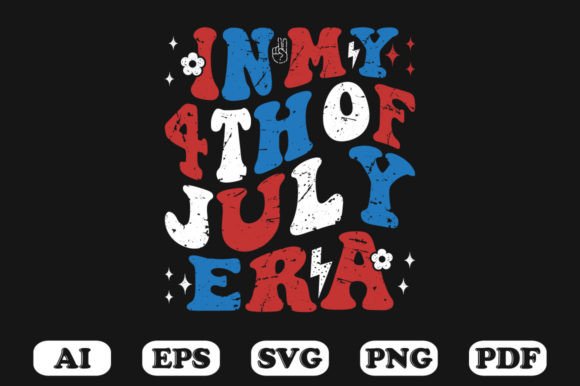
When I opened My 4th of July Era USA Retro Wavy SVG, I didn’t just see a patriotic graphic—I saw a mood. That gentle, rhythmic wave in the lettering immediately evokes roadside diners, vintage postcards, and small-town parades. It’s not loud or aggressive patriotism; it’s warm, approachable, and quietly confident. As someone who regularly selects embroidery files for boutique apparel and handmade gifts, I appreciate how this design balances theme and texture without leaning into cliché. The wavy baseline gives movement—ideal for soft goods like tote bags or pillow covers—while the clean, mid-century-inspired letterforms hold up well at medium sizes.
Real-World Test: Embroidering a Holiday Tote Bag
Last week, I used My 4th of July Era USA Retro Wavy SVG on a natural canvas tote for a local craft fair pop-up. I chose a 4.5” wide placement centered on the front panel—just large enough to read clearly but not so big it overwhelmed the fabric’s texture. With light stabilizer and 40-weight cotton thread in navy and cream, the result felt cohesive and intentional. Customers responded positively—not just to the message, but to how *handmade* it looked. That subtle wave translated beautifully into satin stitch curves, and the spacing between letters allowed fill stitches to breathe. No puckering, no skipped stitches. It held up through two rounds of mockup stitching on scrap denim and canvas first—always my non-negotiable step before committing to client work.
Where This Design Shines (and Where It Needs Care)
My 4th of July Era USA Retro Wavy SVG excels on structured, medium-weight fabrics: sweatshirts, tea towels, aprons, and embroidered patches. Its moderate height and open letter spacing make it forgiving on slightly textured surfaces—no micro-details that vanish in dense fill stitch. For baby embroidery or nursery decor, it reads warmly and legibly even at 3.25”, especially when paired with soft pastel thread on organic cotton.
That said, proceed thoughtfully with:
- Stretchy or thin fabrics: The wave shape relies on consistent tension—test thoroughly on knits or lightweight rayon blends before using on t-shirts or baby onesies.
- Curved surfaces: Caps or curved pillow edges may distort the wave’s rhythm. Consider simplifying or adjusting placement if hooping is tight.
- Dark or heavily textured backgrounds: While the design has strong contrast potential, avoid pairing fine white thread on black corduroy without extra stabilizer—it can mute the wave’s flow.
- Commercial embroidery projects requiring high stitch-count precision: This isn’t an applique design or complex motif—it’s typography-driven, so manage expectations around decorative density. It won’t replace a full emblem, but it adds unmistakable character as a standalone machine embroidery design.
What It Adds to Your Finished Product
This isn’t just another holiday SVG—it elevates perceived value. When customers see My 4th of July Era USA Retro Wavy SVG on a custom embroidered sweatshirt or kitchen towel, they register craftsmanship, intention, and seasonal authenticity—not mass-produced clip art. That matters for Etsy sellers and small shop owners: it supports brand consistency across holiday collections, strengthens giftability (especially for personalized gifts), and encourages repeat engagement. I’ve watched shoppers pause longer at items featuring this design versus generic star-and-stripes motifs—it feels curated, not templated.
For craft business owners, it also works hard behind the scenes: it scales cleanly for printable mockups, holds contrast in both light and dark fabric previews, and translates well into digital product previews without heavy editing. As a typography SVG, it’s inherently flexible—pair it with simple borders or use it solo. Just remember: its strength lies in clarity, not complexity.
Practical Notes Every Embroidery Designer Should Keep Handy
Before you load My 4th of July Era USA Retro Wavy SVG into your embroidery software or list it in your Etsy shop:
- Test on scrap fabric first—especially if using textured weaves or stretch materials.
- Check thread color contrast in natural light; what looks bold on screen may soften after stitching.
- Review stitch density—if converting from SVG to embroidery file, ensure running stitch outlines aren’t too sparse for your fabric weight.
- Confirm hoop size compatibility—this design fits comfortably in a 5x7 hoop, but verify before digitizing for smaller formats.
- Inspect corners and curves—the wave’s smooth arcs should convert cleanly to satin stitch without jagged transitions.
- Try black-and-white mockups to assess visual balance and readability at different sizes.
- Use appropriate stabilizer: medium cutaway for knits, tear-away for stable wovens.
- Verify licensing terms before selling finished products or reselling the digital embroidery file—this is a Graphics asset intended for Crafts use, but commercial rights must be confirmed directly with the source.
Final Thought: A Design That Earns Its Place
My 4th of July Era USA Retro Wavy SVG doesn’t shout. It invites. It fits naturally on a hand-stitched apron for a bakery’s Independence Day special, anchors a set of embroidered tea towels for a cottagecore Etsy shop, or becomes the quiet centerpiece of a baby’s holiday onesie. As a designer and reviewer, I don’t reach for it when I need flash—I reach for it when I want resonance. It’s proof that thoughtful typography, rooted in era and emotion, remains one of the most effective tools in any embroidery project. Use it with intention, test it with care, and let its retro wave carry your handmade product forward—with pride, not noise.